Sourcing
We believe good ingredients deserve to be seen
Three ingredients. Three places in China. Each with its own growing conditions, local expertise and way of doing things.
We choose producers for their experience, cultivation practices and approach to quality. Where possible, we visit the places behind our ingredients to understand how they're grown and handled.
01 · Reishi · Longquan, Zhejiang
Grown on hardwood logs
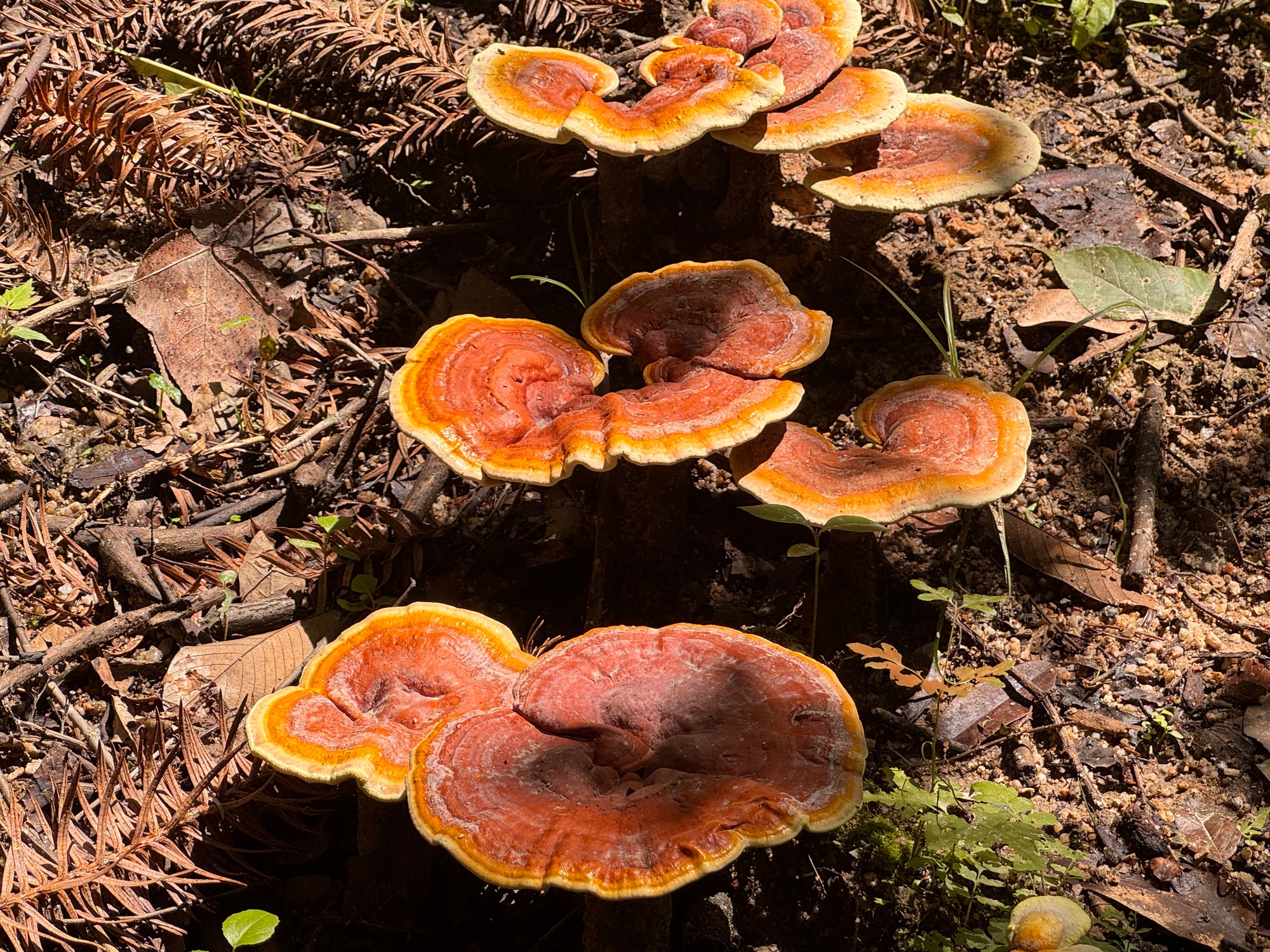
Longquan is known for its reishi cultivation. Its humid climate, mountain forests and wooded landscape provide favourable conditions for growing mushrooms.
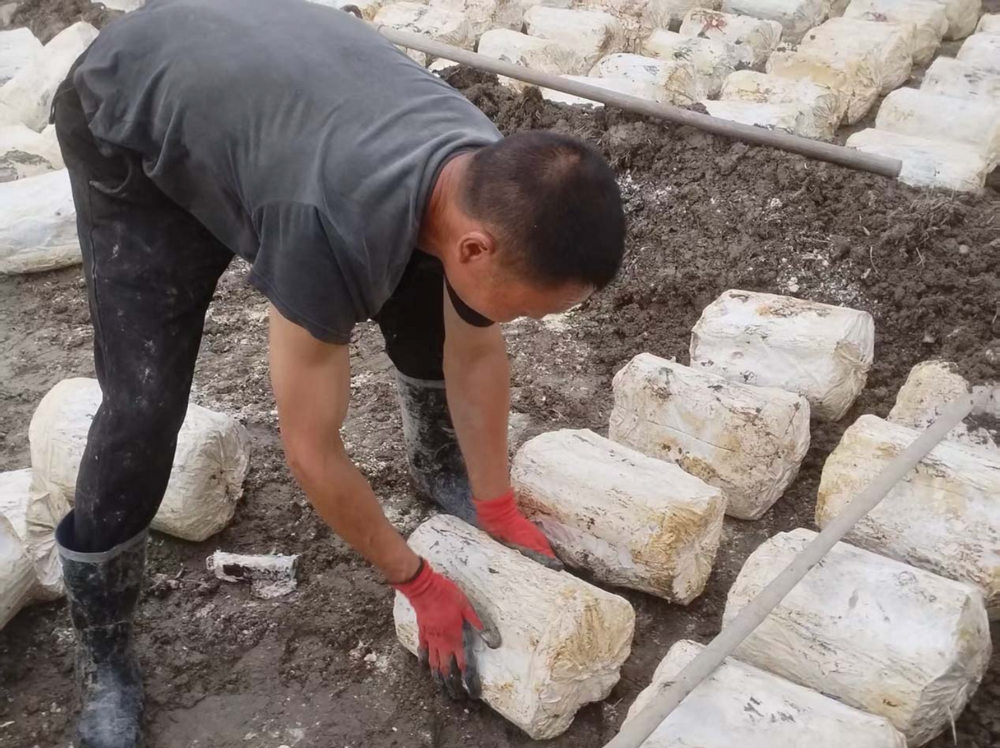
Our reishi is grown on hardwood logs. The logs are inoculated with reishi mycelium, placed in the ground and covered with soil, allowing the fruiting bodies to develop above the surface.
Cultivation begins around February, with harvesting typically taking place in autumn, once the mushrooms have matured and released their spores.
No pesticides or chemical fertilisers are used during cultivation, with pests managed through physical methods.
We visited the cultivation sites and processing facilities ourselves, seeing the work involved from the growing environment onwards.
02 · Lion's mane · Gutian, Fujian
A winter mushroom
China has decades of experience cultivating lion's mane, with large-scale production established by the 1980s. Ours comes from Gutian, Fujian, in south-eastern China — a region of wooded hills and mountain valleys, whose mild, humid climate and decades of local growing experience favour mushroom cultivation.
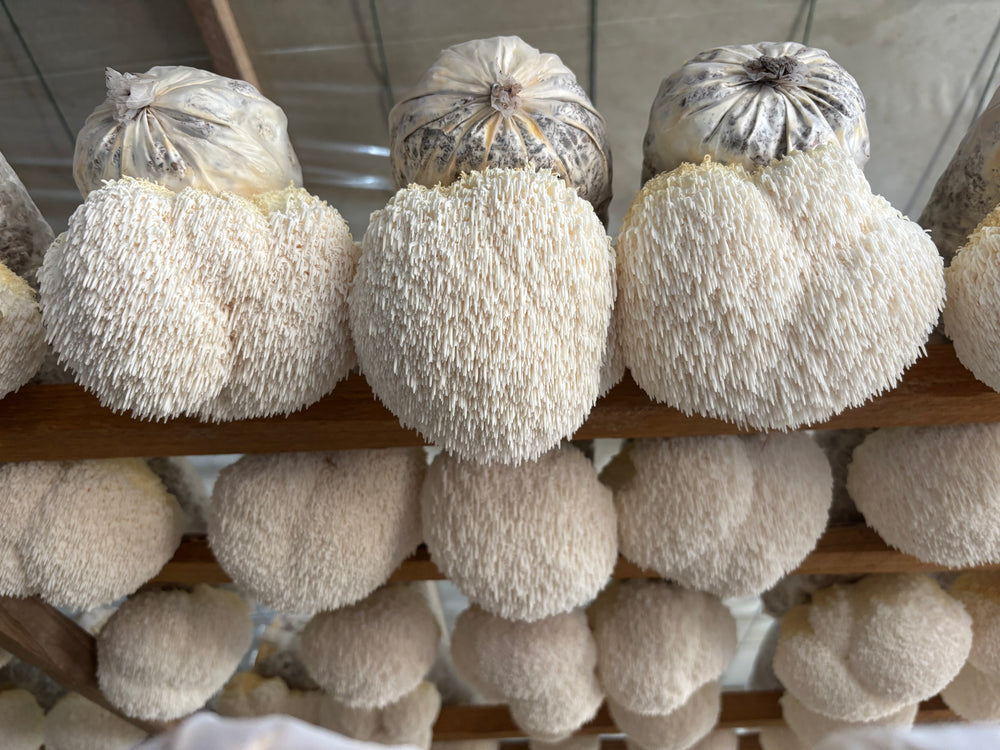
Our lion's mane is cultivated between November and April. The mushrooms grow on prepared blocks containing hardwood sawdust and wheat bran. Only the harvested fruiting bodies are used in our blend.
Temperature, humidity and airflow are monitored throughout cultivation. Our partner farmer uses physical pest-control methods, with no pesticides or chemical fertilisers used during cultivation.
03 · Matcha · Jingshan, Zhejiang
Where whisked tea began
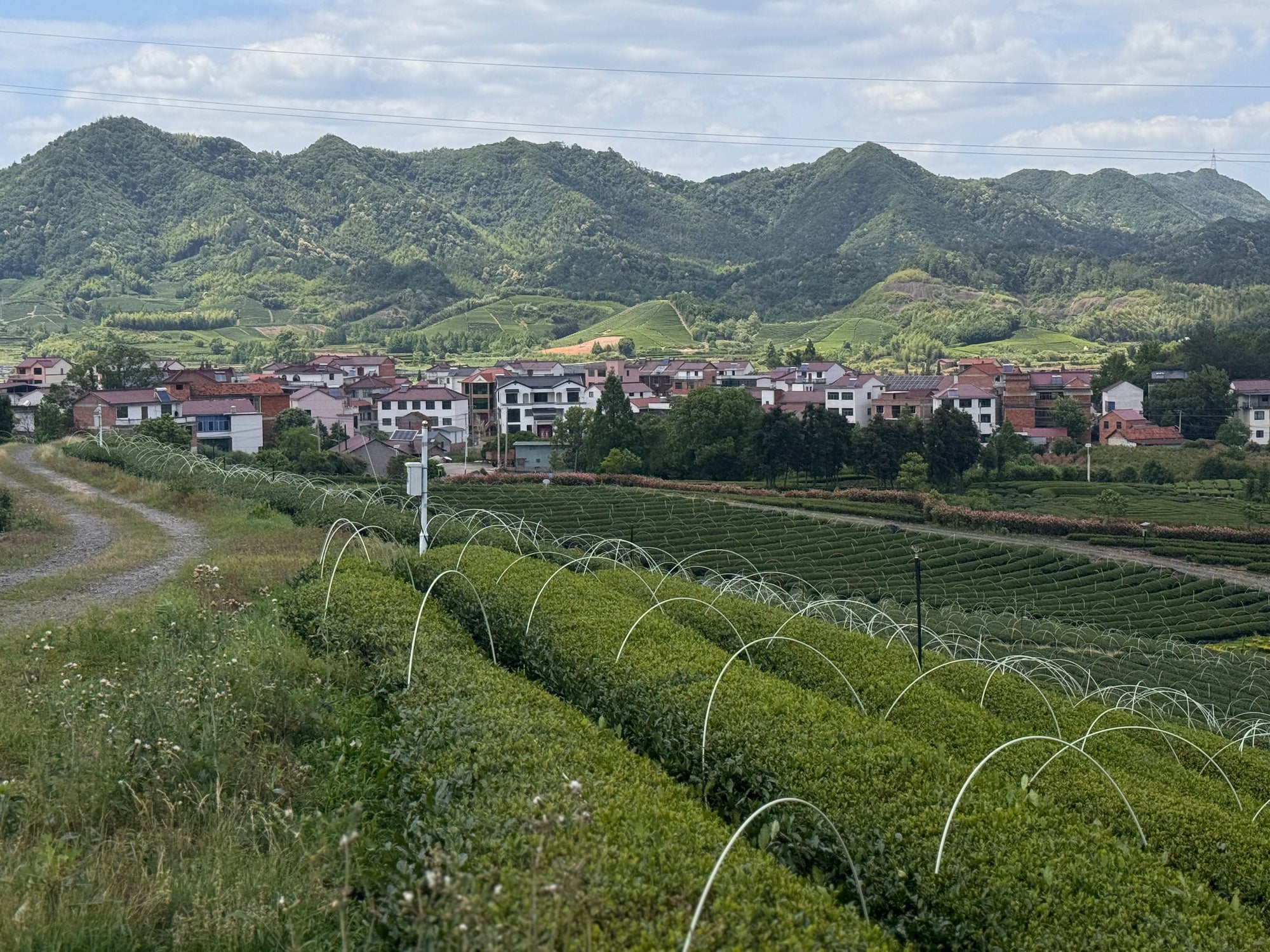
Jingshan's misty hills, abundant rainfall and mild climate make it well suited to growing tea.
Our matcha comes from the Jiukeng cultivar, which has a delicate chestnut note. That flavour was one of the reasons we chose it.
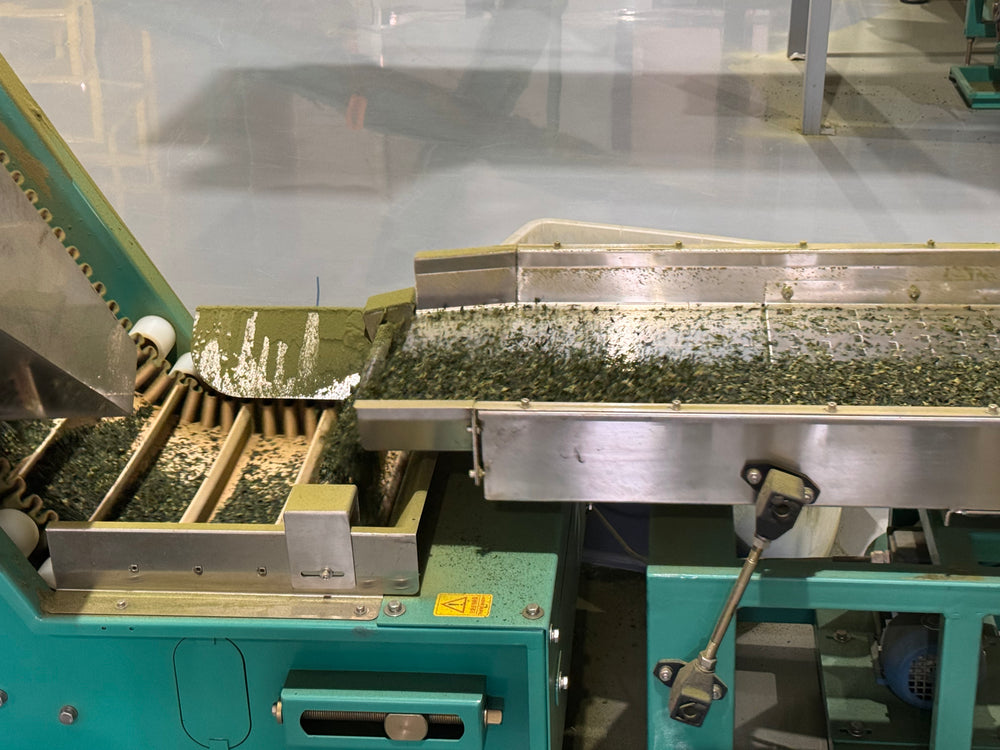
The tea plants are shaded for around 20 days before the spring harvest. The leaves then undergo a combination of brief steaming and gentle hot-air processing, helping develop their fresh character and distinctive aroma.
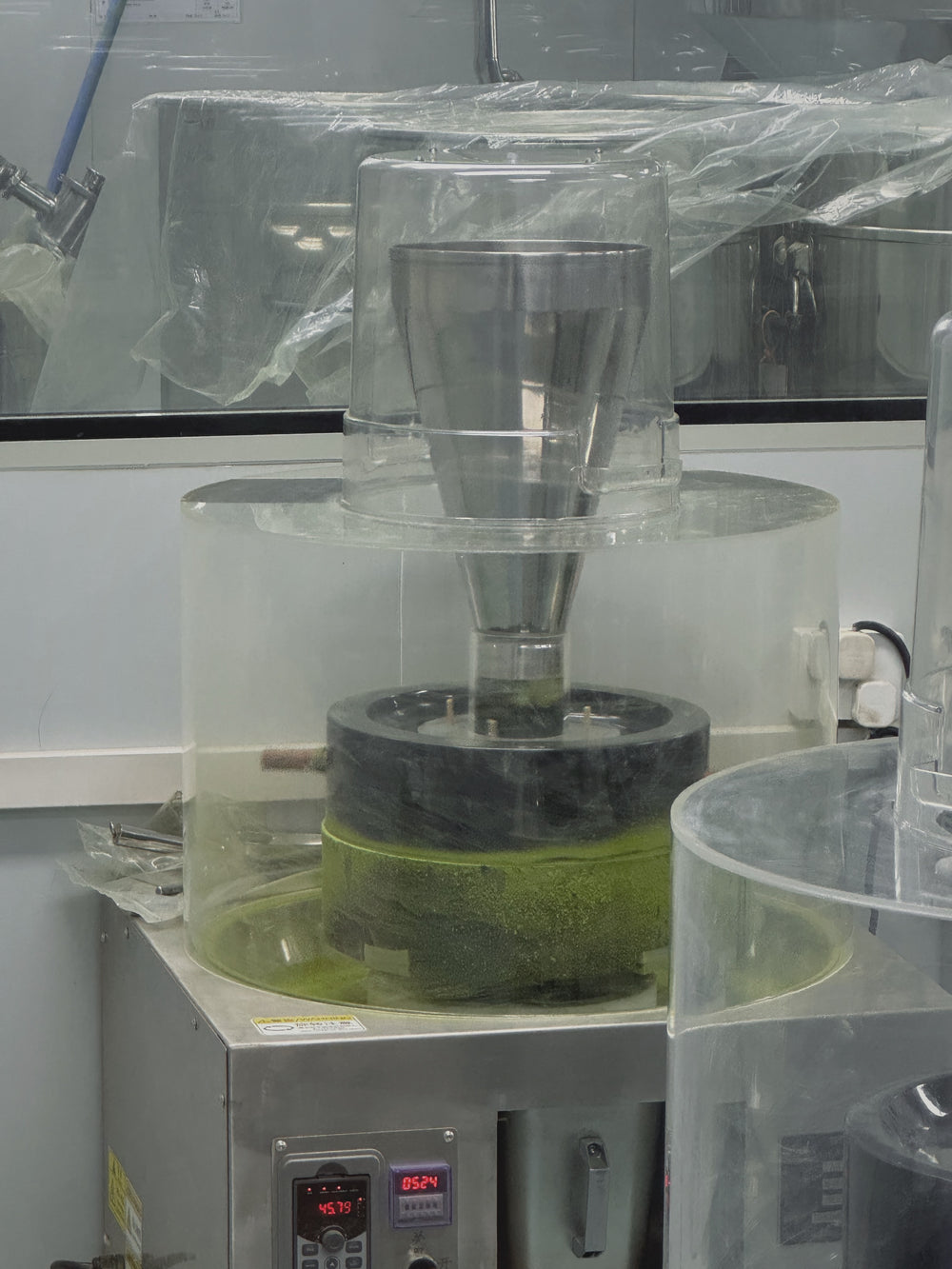
After drying and refining, the leaves are slowly stone-milled into matcha.
We visited the tea gardens and production facilities ourselves, from the shaded plants to the stone mills.
Our Approach to Quality
We work with producers who can provide information about their cultivation methods, ingredient specifications and quality controls.
For our mushroom ingredients, our available documentation includes third-party raw-material testing for pesticide residues and heavy metals, alongside supplier-issued batch analysis. For our matcha, our current documentation includes pesticide-residue testing.
We believe good sourcing means knowing the people, places and processes behind an ingredient — and being clear about what has been checked along the way.
Meet our lion's mane, reishi and matcha below